

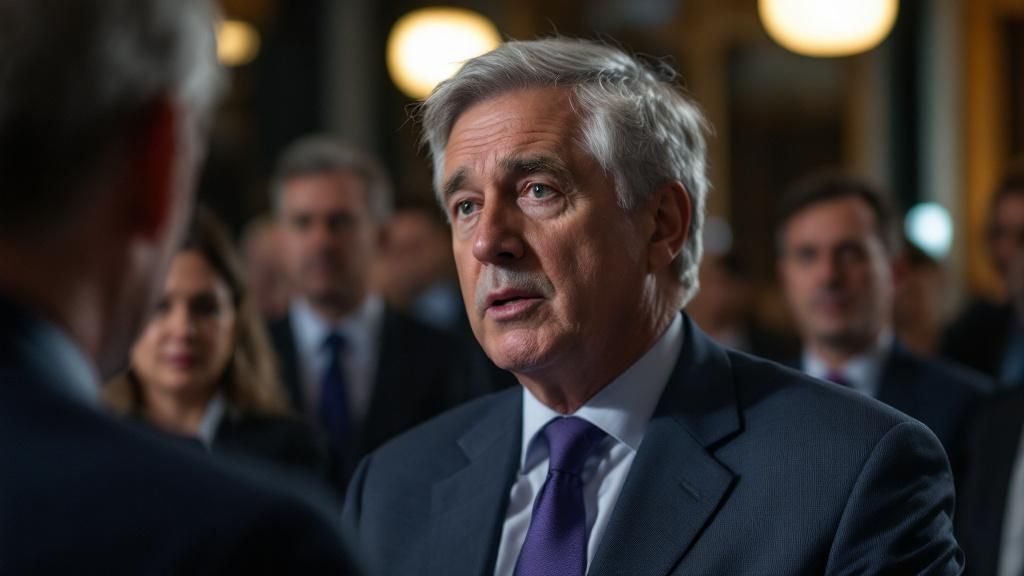
As families across the nation contend with soaring energy bills and price increases climbing to unprecedented levels, the opposition figurehead has launched a biting attack on the Prime Minister’s response to the living costs crisis. In a tense parliamentary confrontation, the Labour party has scrutinised the administration’s limited assistance schemes, calling for more substantial action to help hard-pressed families. This article explores the intensifying tensions relating to the crisis and investigates the rival approaches for financial support.
The Opposition party’s Criticism of State Policy
The opposition leader has increased pressure of the government’s handling of the mounting cost-of-living emergency, arguing that present interventions prove inadequate in addressing the extent of difficulty impacting British families. In parliamentary debate, the opposition has presented a detailed critique covering inadequate financial support, inadequate action in the energy sector, and a apparent absence of urgency in tackling inflation. The opposition maintains that whilst households grapple with unprecedented bills, the government’s piecemeal approach only addresses surface issues rather than tackling underlying causes of economic hardship.
Central to the opposition’s argument is the contention that the government has badly miscalculated both the severity and duration of the crisis. Opposition officials have highlighted statistical evidence showing that millions of people now face genuine hardship, with many forced to choose between heating and eating. The opposition argues that the government’s first response failed to assess the crisis’s impact, leading to assistance programmes that were found wanting when circumstances deteriorated further. This error of judgment, they argue, demonstrates broader failures in economic forecasting and policy preparation.
Insufficient Support Systems
The opposition has directly criticised state assistance programmes as lacking in scope and precision, contending that energy price cap mechanisms fail to protect at-risk groups effectively. Commentators highlight that whilst the government has established different funding schemes, including grants and council tax rebates, these measures deliver limited reprieve without addressing structural challenges. The opposition contends that eligibility-based assistance remain too restrictive, shutting out millions of families in work who yet contend with mounting expenses. Moreover, they argue the government’s approach lacks the determination necessary to confront such an unparalleled economic difficulty.
Opposition assessment indicates that current support mechanisms disproportionately disadvantage families on moderate incomes who fall between eligibility thresholds for means-tested support. The party has proposed alternative frameworks incorporating unconditional income transfers, enhanced benefit programmes, and direct government intervention in energy markets to control costs. They highlight that short-term solutions, though beneficial, cannot substitute for deep-rooted transformation. The opposition maintains that without substantial legislative change and greater state spending, families will remain subject to acute financial strain in the coming period.
Extended Economic Strategic Concerns
Beyond urgent crisis response, the opposition has highlighted crucial concerns regarding the state’s long-term economic direction and competitive position. Opposition analysts argue that the present method emphasises short-term political optics over long-term economic sustainability, potentially compromising Britain’s future prosperity. They contend that without deliberate investment in clean energy infrastructure, industrial capacity, and human capital development, the nation risks prolonged economic stagnation. The opposition stresses that tackling cost of living challenges requires comprehensive reforms targeting productivity, innovation, and sectoral development alongside pressing relief measures.
The opposition has outlined concerns that government policy lacks coherence across different sectors, with energy policy, industrial strategy, and fiscal measures operating in isolation rather than as unified parts. Critics argue this fragmented approach prevents effective addressing of underlying inflationary pressures and structural economic weaknesses. The opposition pushes for a coordinated national strategy encompassing energy transition, manufacturing revival, and skills development. They maintain that true economic recovery necessitates radical policy overhaul rather than gradual modifications to existing frameworks.
Government’s Response and Counter-arguments
The government has robustly defended its fiscal approach, arguing that the affordability pressures are largely driven by global factors beyond Westminster’s immediate reach. Ministers have underscored the extraordinary scale of the energy crisis, stemming from geopolitical conflicts and international supply chain disruptions. They argue that their targeted support packages, including the price cap on energy and affordability support payments, embody a balanced and economically prudent approach. The Treasury maintains that overspending could exacerbate inflation further, undermining long-term economic stability and eventually harming the identical households the opposition purports to support.
Government representatives have stressed the substantial financial assistance previously allocated, amounting to billions of pounds in immediate aid to low-income families. They argue that their measures balance immediate relief with responsible financial stewardship, averting the debt spiral that uncontrolled expenditure could provoke. Ministers also draw attention to their efforts in boosting energy security through sustainable energy projects and supply diversification. The government asserts that whilst the opposition offers sympathetic rhetoric, their suggested policies lack financial viability and would create unsustainable outcomes without raising tax rates or increased borrowing.
Furthermore, government officials highlight their resolve to confronting core economic problems through output gains and corporate investment encouragement. They maintain that enduring recuperation necessitates systemic economic transformation rather than short-term payments. The administration considers this method ultimately delivers increased wealth and protection for the entire population.
